
CERN’s Strategy and main objectives for the period 2026-2030
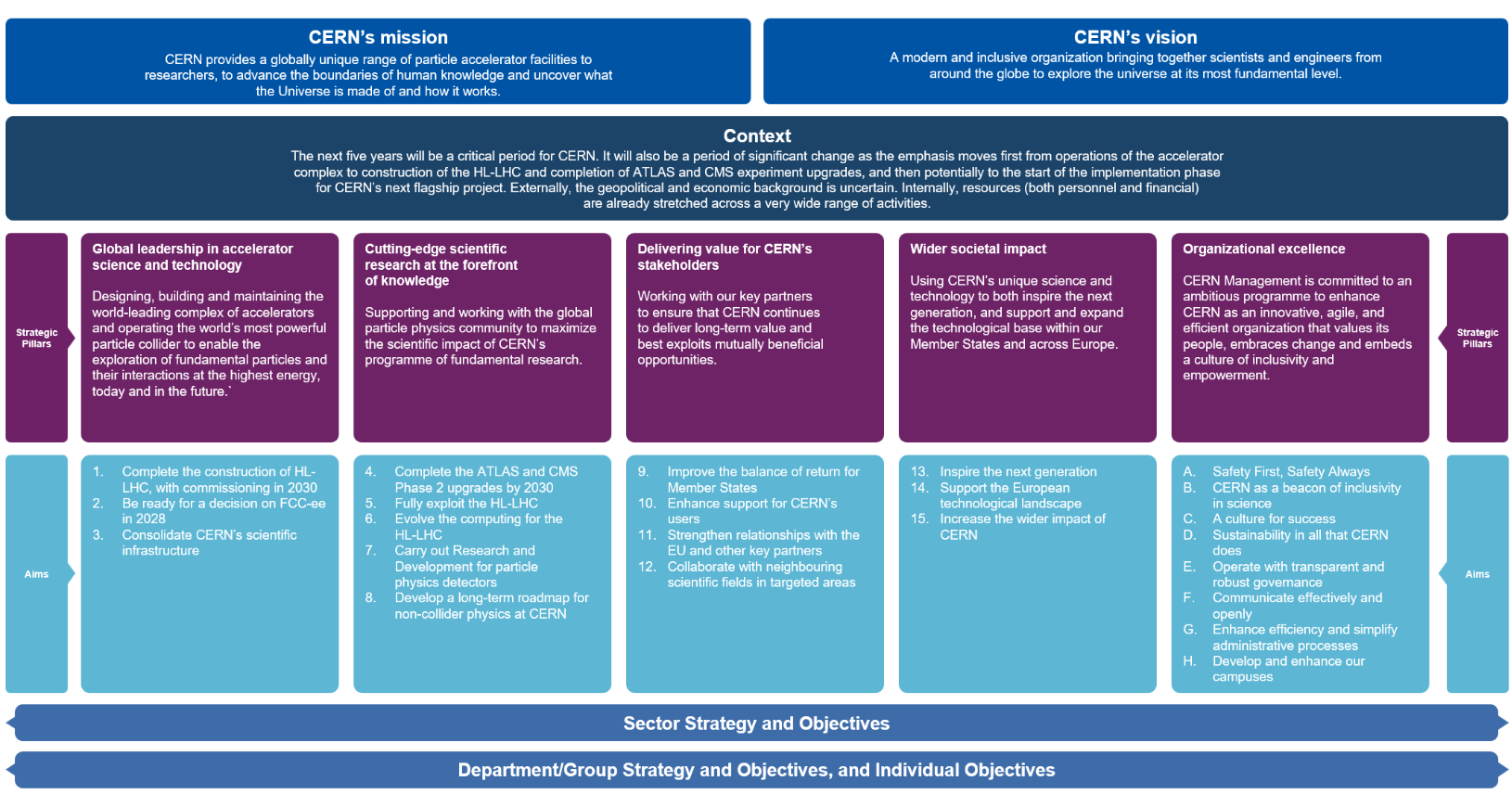
This document describes CERN’s Strategy for the period 2026-2030. Embedded in the wider organisational and geopolitical context, and built on five strategic pillars, the main objectives of the Organization are described in 23 Aims. For each Aim strategic priorities are formulated. We monitor progress towards these Aims via our Strategic KPIs.
A PDF version is available on CDS.
MESSAGE FROM MARK THOMSON
CERN DIRECTOR-GENERAL
The next five years are crucial for CERN. As we implement the High-Luminosity LHC, construct the ATLAS and CMS detector upgrades and aim to secure approval of the Future Circular Collider, the whole CERN community must come together to ensure success.
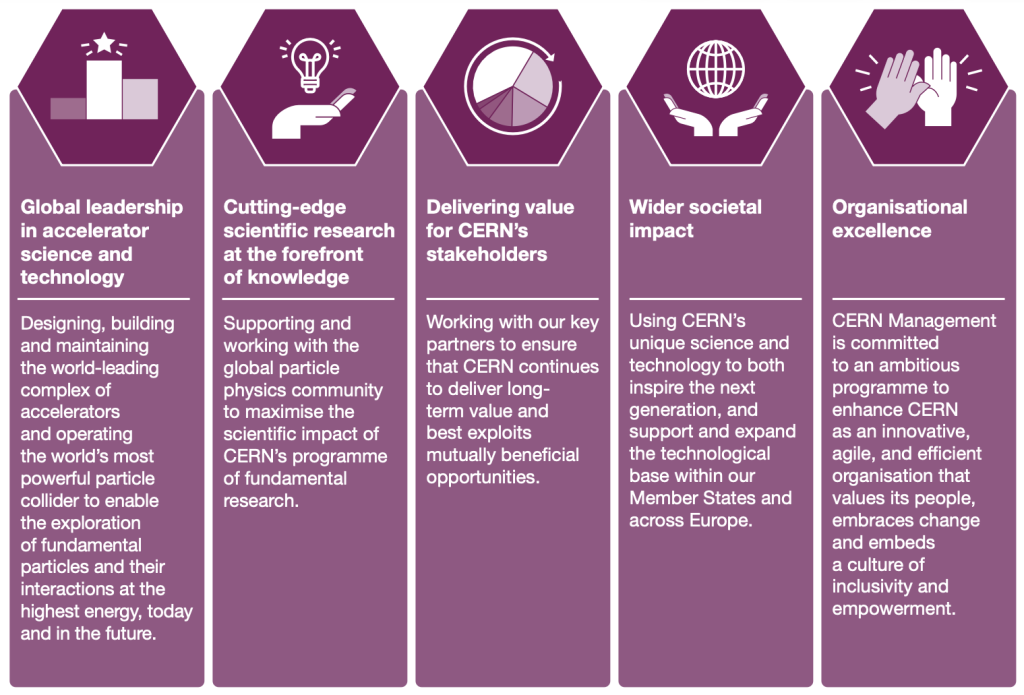
The CERN Strategy for 2026 to 2030 was approved by CERN Council in June 2026. It closely follows the priorities identified in the 2026 update of the European Strategy for Particle Physics. It identifies clear aims across five strategic pillars: global leadership in accelerator science and technology; cutting-edge scientific research at the forefront of knowledge; delivering value for CERN’s stakeholders; wider societal impact; and organisational excellence.
Our highest priority is to commence HL-LHC operation in the summer of 2030, which requires clear focus and prioritisation in order to bring the numerous activities planned during Long Shutdown 3 (LS3) to a successful conclusion. To this end, we are focusing resources on the completion of both the machine and the ATLAS and CMS detector upgrades. Looking beyond LS3, CERN is committed to the upgrades of ALICE and LHCb that are needed to fully exploit HL-LHC operation. In parallel to the HL-LHC programme, maintaining a vibrant programme of non-collider physics at CERN remains a priority.
The visionary FCC-ee project is a major focus of the CERN Strategy. It would be a wonderful machine, offering a huge range of exciting scientific opportunities. The FCC-ee was identified by the European particle physics community as the clear preference for CERN’s next flagship collider in the post HL-LHC era. Consequently, the highest long-term priority for CERN is to progress the FCC-ee to the approval point. Until a decision on the FCC-ee has been taken, it is the only option being considered as CERN’s next collider. The FCC is a once-in-a-generation opportunity and I ask the whole community to get behind it to secure an exciting future not only for CERN but also for collider-based particle physics.
CERN is a truly amazing place, with brilliant people working towards the common goal of understanding the Universe at its most fundamental level. The way we work, through collaborative efforts across the globe, is also remarkable. This Strategy defines how we will channel this excellence and build the best environment to realise our ambitions.
The CERN strategy and objectives for the period 2026 to 2030 build upon the European Strategy for Particle Physics that was updated by CERN Council on 22 May 2026. The next five years will be particularly important for CERN, with great opportunities and numerous challenges. The period 2026–2030 marks a shift from operation of the LHC to the construction of the HL-LHC for operation in 2030 and progressing the design study for the FCC-ee as the preferred option for CERN’s next flagship collider. The scientific opportunities offered by the HL-LHC are huge, and there is a clear case that the FCC-ee is the best machine to continue our accelerator-based exploration of the fundamental nature of the Universe. But the challenges ahead should not be underestimated.
The HL-LHC represents CERN’s largest construction project since that of the LHC almost twenty years ago. The same can be said for the upgrades of the ATLAS and CMS detectors. Both the HL-LHC and the detector upgrades represent major technical, logistical and organisational challenges and the completion of this programme of work by 2030 cannot be taken for granted. The schedule slippages that have accumulated over the past few years cannot continue without impacting CERN’s long-term plans. For this reason and given the incredible scientific opportunities offered by the HL-LHC, we will maintain a laser focus on the timely completion of the HL-LHC (machine and detectors). This is CERN’s number one priority for the next five years. Where needed, resources will be diverted from other areas to ensure success.
There is near consensus within the particle physics communities of CERN’s Member States that the FCC-ee is the preferred option for the next flagship collider at CERN from a scientific and strategic perspective. Building on the FCC Feasibility Study, in the Reference Design Phase, CERN will develop the detailed design and progress the implementation plans, with the goal of being in the position to seek Council approval in 2028. This goal represents CERN’s highest long-term scientific priority.
The third pillar in CERN’s scientific strategy is the non-collider physics programme that exploits CERN’s unique accelerator complex, infrastructure and expertise. The continuation of this programme through 2026–2030 and far beyond is a critical aspect of the wealth of science at CERN and will remain a high priority. The next steps will be to develop and implement a coherent long-term plan for the evolution of non-collider physics at CERN.
The next five years will also be marked by the rapidly expanding role of next-generation artificial intelligence (AI) and new digital technologies in scientific research. CERN and its scientific community will both benefit from and contribute to these developments, integrating them across scientific and operational domains to advance CERN’s mission.
As an intergovernmental organisation, it is essential that CERN works with our Member and Associate Member States, large and small, to ensure that all see the full benefits of CERN Membership beyond those relating to the scientific and cultural value of fundamental research. Working in partnership with our members, CERN will further increase efforts to better balance industrial and technological return and to ensure that all Member States are appropriately represented within CERN’s personnel. Now, more than ever, this is critical for CERN and CERN’s future ambitions.
CERN is not an island. Our plans, and those of our communities, operate within an increasingly uncertain world. The current economic situation across Europe means that competition for resources is becoming more challenging and there are increased risks regarding supply chains and potential inflationary cost pressures. Given this background, focusing our activities and resources will be essential to deliver successfully the highest strategic priorities. This strong focus is an overarching principle in CERN’s strategy and financial planning for 2026–2030.
Finally, despite the current uncertain geopolitical situation, CERN remains a place where nations come together to pursue an inspiring mission of exploration and discovery. Today, this role of binding together nations, across Europe and beyond, in the pursuit of a common goal is ever more important and CERN will work with our many partners to ensure that scientific collaboration in particle physics continues to thrive in these uncertain times.
The CERN Management’s strategy for 2026–2030 is strongly guided by the above considerations and will be implemented through five high-level strategic pillars:
CERN’s objectives cannot be achieved without its dedicated and highly professional workforce. Their continued commitment to excellence and to the Organization’s future is, and will remain, essential to achieving these goals.
Mission
CERN provides a globally unique range of particle accelerator facilities to researchers, to advance the boundaries of human knowledge and uncover what the Universe is
made of and how it works.
Vision
A modern and inclusive organisation bringing together scientists and engineers from around the globe to explore the Universe at its most fundamental level.
Context
The next five years will be a critical period for CERN. It will also be a period of significant change as the emphasis moves first from operation of the accelerator complex to construction of the HL-LHC and completion of the ATLAS and CMS experiment upgrades, and then potentially to the start of the implementation phase for CERN’s next flagship project. Externally, the geopolitical and economic background is uncertain. Internally, resources (both personnel and financial) are already stretched across a wide range of activities.
Culture
Success in the coming years will require a coherent, focused effort, with the whole of CERN working collectively across departmental boundaries towards the strategic priorities defined here. At this important time, it will be necessary to do less to focus resources on the highest priorities. Just because CERN can do something, does not mean that it should. The strategy in this document thus provides the guiderails for prioritisation of existing and future activities. Furthermore, a shift in culture will be required to achieve the goals set out here. In this respect, the CERN Management will:
- Embed a culture where personnel, at all levels of the Organization, are trusted and empowered to deliver within clear strategic priorities.
- Break down perceived (or real) silos and adopt an openness to change, including reshaping the Organization and ways of working to meet the evolving focus of CERN’s scientific priorities and to ensure long-term sustainability of the Laboratory.
Strategic pillars and aims
CERN’s strategy is built around five strategic pillars, each with several high-level objectives, as indicated in Figure 1. These objectives will form the basis for Sector and Departmental strategies and will ultimately propagate down to the individual objectives of the personnel.

PILLAR 1: Global Leadership in Accelerator Science and Technology
Designing, building and maintaining the world-leading complex of accelerators and operating the world’s most powerful particle collider to enable the exploration of fundamental particles and their interactions at the highest energy, today and in the future.
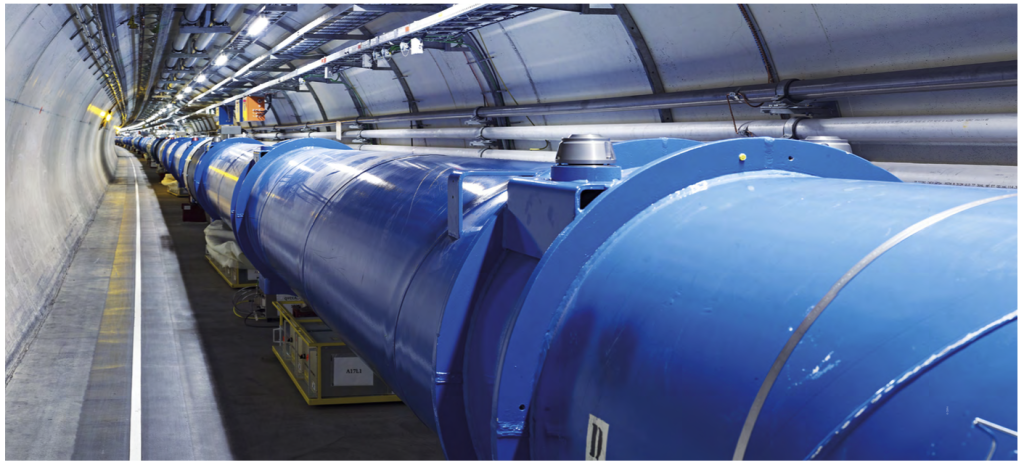
AIM 1: Complete the construction of the HL-LHC, with commissioning in 2030.
The top priority for 2026–2030 will be to start HL-LHC operation in the summer of 2030, with the installation and integration taking place during Long Shutdown 3 (LS3).
- The HL-LHC is a major, technically challenging project that will require laser focus across the Organization. It is the largest technical project at CERN in the last 20 years since the construction of the LHC. Completion of the HL-LHC by the middle of 2030 is, and must be, CERN’s highest priority by far. This priority will be reflected in CERN’s financial and personnel planning, taking account of the required cost and schedule contingency to ensure a high probability of success.
- Reflecting the priority of the HL-LHC, a global resource-loaded activity plan for all LS3 activities is being developed. This activity plan will include prioritised options for descoping non-HL-LHC activities during LS3, each with clear decision points and criteria. This will allow an agile response to maintain the HL-LHC schedule if problems are encountered.
AIM 2: Be ready for a decision on the FCC-ee in 2028.
Based on the outcome of the European Strategy for Particle Physics update, CERN’s second-highest priority objective is to be in a position, in 2028, to propose the FCC-ee to the Council as CERN’s next flagship collider. CERN will be seeking a go/no-go decision on the FCC-ee alone.
- An open and transparent process will be put in place to provide the CERN Council with all the information needed to make an informed assessment of the case for the FCC-ee, including: a clear plan for funding; a detailed analysis of risks, financial and otherwise; risk mitigation strategies; descoping and staging options; and two alternative scenarios at the level of detail suitable for an options analysis in the context of a go/no-go decision on the FCC-ee.
- A new FCC Project Office has been established to take over the coordination of all FCC-ee work at CERN, with the FCC Project Leader reporting directly to the Director-General. The planning and project coordination of the FCC-ee Reference Design Phase will be the responsibility of the FCC Project Office, with all FCC project activities embedded within CERN’s Sectors. In June 2026, the Council will be invited to approve the details of the organisational structure at CERN for the FCC, the objectives and deliverables of the Reference Design Phase (2026–2028) up to the potential decision point, and the scientific and technical review structure.
- All FCC Host-State and regional public outreach activities will be coordinated and delivered within the Stakeholder Relations Sector, with a clearly identified single interlocutor for political and high-level administrative interactions with officials in CERN’s Host States.
- A strategic communications plan, coordinated through Stakeholder Relations, will be put in place to present the strongest possible case for the FCC-ee, with clear messaging tailored to key stakeholders, including the political level and senior officials, the wider scientific community, the local population and the public.
- In several CERN Member States, a decision on the FCC-ee will need to be taken in the context of an analysis of options. To this end, CERN will develop two lower-cost collider scenarios at a level of detail that is sufficient for consideration in an options analysis. The scenarios will include a reviewed design, a justified cost model with uncertainties, risk analyses and a clear roadmap for any subsequent steps. Given the existing pressure on resources, the studies of alternative scenarios cannot be close to the level of the FCC Feasibility Study and will not include siting studies. Similarly, additional R&D activities during the 2026–2028 period will be limited to those that are synergistic with R&D for the FCC-ee.
- Except for the continued development of high-field magnet technology, which is needed for a future hadron collider option, the focus of the FCC Reference Design Phase will be almost entirely on the FCC-ee and its scientific community.
AIM 3: Consolidate CERN’s infrastructure.
The consolidation programme during LS3 will build on the previous successful LHC Injectors Upgrade (LIU) programme to ensure the continued resilience of CERN’s accelerator infrastructure.
- The consolidation of CERN’s injector complex, related experimental facilities and technical infrastructure remains a high priority. It is essential for the long-term, safe and efficient operation of the CERN accelerator complex. The highest priorities during LS3 will be driven by the scientific aim to retain a long-term programme of non-collider physics from the PS and the SPS. After the HL-LHC, the LS3 consolidation programme is the second highest technical priority for the Accelerator and Technology Sector (ATS). Despite this, it might be necessary to dynamically descope some activities of the planned consolidation programme during LS3 to ensure the success of the HL-LHC.

PILLAR 2: Cutting-edge Scientific Research at the Forefront of Knowledge
Supporting and working with the global particle physics community to maximise the scientific impact of CERN’s programme of fundamental research.
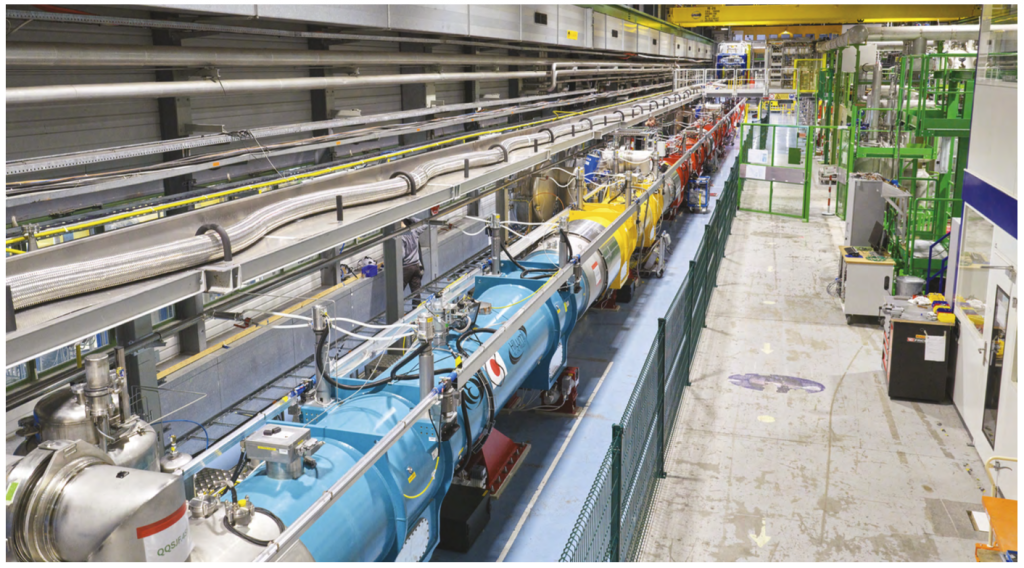
AIM 4: Complete the ATLAS and CMS Phase 2 upgrades by 2030.
Alongside the completion of the HL-LHC, the completion and integration of the Phase 2 upgrades of the ATLAS and CMS detectors by 2030 is the highest priority for CERN.
- To proactively mitigate the risk of further delays, CERN will immediately strengthen the host-laboratory programme for ATLAS and CMS through the creation of new “LS3 upgrade” posts for the period 2026–2030. These posts will be split between ATLAS and CMS technical coordination and engineering posts to exclusively support the ATLAS and CMS upgrades. In the assessment of the CERN Management, this investment is necessary to mitigate some of the risks associated with the Phase 2 upgrade schedule; it will increase the likelihood of success at an additional cost that is small compared to the cost and wider impact of further delays.
AIM 5: Fully exploit the HL-LHC.
After the upgrades of ATLAS and CMS during LS3, the proposed upgrades of the LHCb and ALICE detectors during LS4, scheduled for 2034–2035, are necessary next steps to fully exploit the science from the HL-LHC running up until 2041.
- The design and options for the upgrades of the ALICE and LHCb detectors are at an advanced stage of development. The next critical step is the development of the technical design reports (TDRs) and the associated funding model. To install the upgrades during LS4 requires rapid convergence on the scope of these upgrades during 2026, followed by rapid progress towards TDRs. It is a high priority to reach decisions on both the LHCb and ALICE upgrades that are compatible with the LS4 schedule and available funding and represent an acceptable level of risk. CERN will work with the collaborations and their funding agencies to develop a concrete plan of action for the ALICE and LHCb upgrades with the aim of ensuring the full exploitation of the HL-LHC from 2036–2041.
AIM 6: Evolve the computing for the HL-LHC.
The Worldwide LHC Computing Grid (WLCG) has been a cornerstone of the success of the current LHC programme and represents a major achievement of the global particle physics community. Full exploitation of the HL-LHC will require an increase in the storage, computing and network capacity compared to the present infrastructure, as well as advances in the software base of the experiments.
- CERN will continue to work with the LHC collaborations to ensure that the computing resources required for the HL-LHC can be delivered within the expected financial envelope. A change of paradigm may be needed in the way the experiments take data and perform physics analysis. The priorities will include modernisation of the computing infrastructure and innovation of software and services, following a scientific review of the experiments’ HL-LHC computing models.
- In addition, CERN will work to increase the adoption of next-generation computing technologies, including modern AI methods, to support the Organization’s scientific and engineering requirements in the HL-LHC era, strengthening discovery potential through close collaboration with the international particle physics community.
AIM 7: Carry out Research and Development for particle physics detectors.
CERN, in collaboration with the high-energy physics community, will continue to explore and develop the technologies required for future particle physics experiments. These include specific detector technologies and transversal technologies that enable the realisation and exploitation of experiments (including electronics and data acquisition, AI-enabled triggers and real-time processing, detector cooling and mechanics, and large experiment solenoid magnet systems). The CERN effort will focus on those activities for which CERN plays a special role due to its in-house expertise and available infrastructure, and on technologies that require continuity and a critical mass which goes beyond the capacities of most university groups. Specifically, CERN will:
- Continue technological R&D to improve the efficiency of experiments and to reduce their environmental impact.
- Complete the necessary R&D for the ALICE and LHCb upgrades.
- Contribute to the implementation of the ECFA Detector R&D Roadmap towards the FCC-ee, via participation in the Detector Research and Development (DRD) collaborations.
AIM 8: Develop a long-term roadmap for non-collider physics at CERN.
The non-collider physics programme is a high priority for CERN. It delivers a broad programme of science that complements the LHC collider programme and supports a large community spanning atomic physics, nuclear physics and particle physics.
- Reflecting the importance of non-collider physics at CERN, a long-term planning budget line will be established in the Medium-Term Plan (MTP) to support new non-collider physics initiatives.
- The Physics Beyond Colliders initiative has been successful in developing many options for new experiments. There are also potential developments of ISOLDE, AD/ELENA (the “anti-matter factory”) and novel ideas such as the AICE experiment. To progress concrete planning and avoid piecemeal decision-making, the Management will work with the scientific community on the development of a long-term (2027–2046) prioritised roadmap for the future non-collider physics programme at CERN. This will include cost and resource considerations and will initially be based on existing concepts for future non-collider experiments at CERN. The aim is to have this long-term roadmap by early 2027. During this period, the Physics Beyond Colliders initiative will be slowed down to focus on the prioritisation of existing concepts.
- In 2024, CERN took the decision to move ahead with the high-power Beam Dump Facility (BDF) and the Search for Hidden Particles (SHiP) experiment at ECN3 in the North Area. This remains a priority. Whilst good progress is being made with the BDF, the scope, timescale and funding of SHiP remain unclear, particularly in the context of the pressures on funding and the resources required for the upgrades of the LHC experiments. During 2026, CERN will work with the collaboration and funding agencies to reach clarity on the scope and initial schedule of SHiP. This will inform CERN’s work plan for the BDF and the civil engineering for SHiP.

PILLAR 3: Delivering Value for CERN’s Stakeholders
Working with our key partners to ensure that CERN continues to deliver long-term value and best exploits mutually beneficial opportunities.
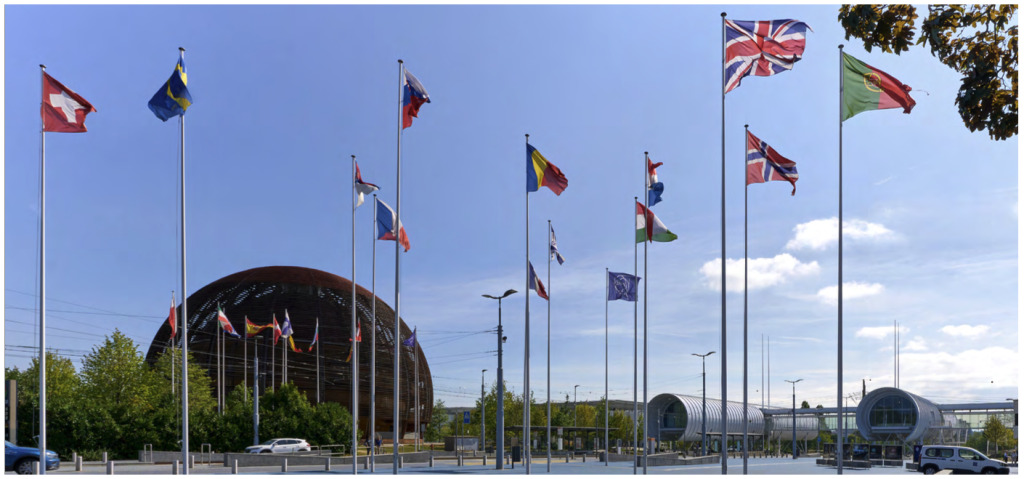
AIM 9: Improve the balance of return for Member States.
CERN is committed to ensuring that all Member and Associate Member States see the full benefits of Membership.
- A dedicated Member and Associate Member State Relations office will coordinate targeted actions to enhance balanced returns, reshaping and strengthening the network of national contact persons to better understand and address the specific needs and concerns of individual Member and Associate Member States.
- The measures to maintain and strengthen national balance in procurement and people will be intensified, including CERN’s approach to hiring and tailored approaches for specific national needs. Additional measures are already being developed in response to the recommendations of the TREF Working Group on National Personnel Returns.
- Talent acquisition will focus on attracting, developing and retaining diverse, world-class talent, supported by robust workforce and succession planning. Progress and policies will be reviewed and benchmarked during the five-yearly review, ensuring attractiveness of working conditions and continuous improvement and alignment with Member State priorities.
AIM 10: Enhance support for CERN’s users.
CERN is committed to enhancing support to its experimental and theoretical scientific user communities, with a particular focus on the specific needs during LS3 for the upgrades of ATLAS and CMS.
- In the coming five years, the scale of the upgrades of ATLAS and CMS will be the largest challenge for these collaborations since the construction of the original detectors. CERN will implement specific actions to support the scientific community and particularly those working on the experiment upgrades by further increasing the attractiveness of CERN to visiting users. Several initiatives are being implemented, including the extension of the 8-year Cost of Living Allowance (COLA) rule to cover the entire LS3 period, improved transport to Point 5, enhanced access to catering facilities and provision of comfortable and flexible office and meeting space. An additional budget, on top of those for ongoing campus action plans, will be allocated to strengthen the support for users during LS3.
- The particle theory community remains essential to the future of particle physics. The CERN Theory Department will explore how to further increase its convening power around projects that are central to our current and future ambitions, including the required worldwide programme of precision higher-order calculations for the FCC-ee.
AIM 11: Strengthen relationships with the EU and other key partners.
CERN is committed to further enhancing relationships with the European Union (EU) and other major external partners.
- CERN aims to strengthen its partnerships with the EU at multiple levels. To this end, a new EU office has been created, bringing together CERN’s existing EU functions to coordinate the Laboratory’s participation in EU projects and new initiatives for mutual benefit to CERN, the EU and CERN’s Member and Associate Member States. CERN will focus on opportunities that build on existing areas of expertise, including open science and potential applications of AI, where closer links to the EU could be of mutual interest.
- CERN has strong and well-established relations with non-Member-State partners outside Europe, including Canada, Japan and the USA. CERN aims to deepen these partnerships, particularly in the context of potential contributions to the FCC-ee. CERN remains committed to supporting the wider international field of particle physics through initiatives such as the Neutrino Platform and the existing commitment to providing two cryostats for the Deep Underground Neutrino Experiment (DUNE) in South Dakota.
- CERN will seek to strengthen engagement with laboratories, innovation hubs and industrial partners in the Member States, particularly in the co-development of innovative technologies. CERN will work with international partners on the high-field magnet programme, including the application of high-temperature superconductors (HTS) to high-field collider dipole magnet development.
AIM 12: Collaborate with neighbouring scientific fields in targeted areas.
CERN has unique areas of technical expertise that are relevant to the neighbouring fields of nuclear physics, astroparticle physics and beyond. Nonetheless, given the pressures on resources during LS3, CERN will prioritise, within available resources, external collaborations based on existing commitments or those that support CERN’s other strategic priorities.
- CERN will continue to work as part of the wider European Research Infrastructure landscape and openly share expertise to the benefit of our Member States, key international partners and European science. For example, CERN will continue to provide expert guidance to the European Spallation Source (ESS) in Sweden and will deliver the existing commitments for FAIR at GSI in Germany. CERN will also continue to support software and computing in large-scale infrastructures, in line with wider priorities.
- CERN already has a strong existing nuclear physics programme at its HIE/ISOLDE and n_TOF facilities, which will return to operation part way through LS3. Potential future upgrades of these facilities will be considered as part of the non-collider physics roadmap within the context of the wider European nuclear physics landscape. Furthermore, the new Beryllium facility at CERN could be used to support the proposed Electron-Ion Collider project in the US, supporting our partnership with the US Department of Energy.
- CERN will continue to support astroparticle physics projects through the Recognized Experiments programme. Furthermore, given the significance to European science of the proposed Einstein Telescope (ET), CERN will continue its support through externally funded activities, including vacuum, civil engineering and other relevant technologies where CERN has unique and critical expertise.

PILLAR 4: Wider Societal Impact
Using CERN’s unique science and technology to both inspire the next generation and to support and expand the technological base within our Member States and across Europe.
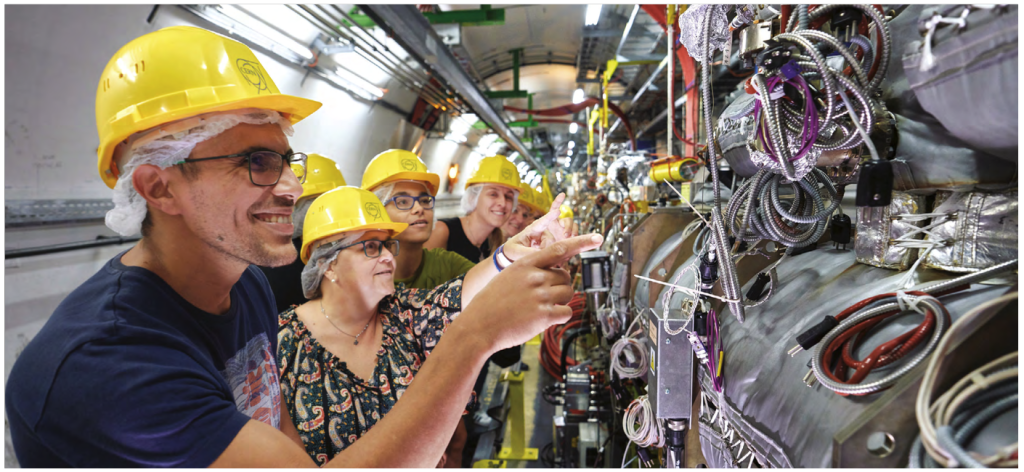
AIM 13: Inspire the next generation.
Using CERN’s unique global brand, inspirational science and impressive facilities to promote science to the public and encourage the next generation to pursue careers in science, technology, engineering and mathematics.
- CERN will raise awareness of the HL-LHC and the FCC-ee through compelling narratives highlighting the current and future physics programmes, technical achievements, and results from the LHC and elsewhere. CERN will strengthen its capacity in education, communications and outreach in Member States. CERN will also review the scope and functioning of outreach-related networks to develop new high-impact activities.
- Science Gateway has been a great success and now attracts around 400,000 visitors annually. Building on this success, CERN will develop a long-term strategy for the sustainable operation of the Science Gateway, including the financial operational model and the strategy for the development of the exhibitions, event programming and educational content.
- CERN will once again open its doors to the public for two days in September 2027, providing access to our sites and our facilities. The Open Day Coordinator has already been appointed and planning has already started.
AIM 14: Support the European technological landscape.
CERN will work with partners on the development and adoption of novel technologies that are tightly aligned to CERN’s core mission. Given the pressures on personnel and material resources during LS3, prioritisation is necessary. In addition to specific expertise in accelerator and detector technologies, CERN will focus on three areas of strategic importance: the application of AI in science, the applications of quantum technologies and quantum computing and the application of high-temperature superconductors (HTS) to collider magnet development.
- CERN will present its AI Strategy and Delivery Plan to the Council in September 2026. This will have three main pillars: application of AI within CERN itself, AI for high-energy physics and wider collaboration with external partners. For the externally facing part of the AI Strategy, the intention is to identify areas of strength and opportunity within CERN and the high-energy physics community that could have wider applications.
- In quantum technology, CERN will pursue two strands: firstly, the application of quantum technologies for fundamental science, focusing on the existing activities within the Quantum Technology Initiative (QTI) and, secondly, working with the Geneva Science and Diplomacy Anticipator (GESDA) on the Open Quantum Institute (OQI), looking at the relevance of quantum computing to developing nations.
- In the area of high-temperature superconductors (HTS), CERN will work with European partners to develop high-field accelerator dipole (and higher multipole) magnets through its High Field Magnet (HFM) programme, as well as lower-field, higher temperature magnets for enhanced sustainability.
AIM 15: Increase the wider impact of CERN.
CERN has many areas of expertise at the forefront of technology that have commercial applications. CERN remains committed to making its research openly available and reusable, for the benefit of the scientific community and society at large.
- CERN will leverage its technical expertise to support innovation and promote effective knowledge exchange with industry in the Member States. The “Knowledge Transfer” strategy will be reviewed and updated to focus predominantly on high-impact areas where CERN is the only or the obvious choice as the partner for industry, ensuring alignment with CERN’s mission.
- The successful initiative relating to the medical applications of accelerator and detector technologies will continue as a coordinated programme.
- CERN will continue to contribute to European Open Science initiatives for the benefit of its Member States and the broad scientific community. CERN’s open science framework will be strengthened through enhanced coordination under the newly established Office of the Chief Information Officer.

PILLAR 5: Organisational Excellence
The CERN Management is committed to an ambitious programme to enhance CERN as an innovative, agile and efficient organisation that values its people, embraces change and embeds a culture of inclusivity and empowerment.
AIM A: Safety. First, Safety Always.
CERN will continue to place the safety of all personnel and visitors to our sites as the highest operational priority.
- CERN will foster a renewed “Safety First, Safety Always” culture that equally emphasises the safety and well-being of people (physical and mental), technical excellence and environmental stewardship, recognising and addressing the diversity of CERN’s workforce, safety risks and facility-specific safety challenges.
- A set of CERN-wide objectives for 2026–2030 has been established, with a particular focus on safety objectives for LS3, supported by measurable targets, consistent monitoring and reporting. Each objective will be complemented by a coherent set of actions structured around five complementary pillars: a just culture, a reporting culture, a learning culture, an informed culture and a flexible culture.
AIM B: CERN as a beacon of inclusivity in science.
CERN will actively promote diversity and inclusion in all its forms, providing an environment where all can thrive within a respectful, accessible and open research environment.
- The new Diversity and Inclusion Oversight and Policy Board will steer and prioritise new ideas. The goal is to have a constant heartbeat of monthly new initiatives, some of which will be relatively small but will have a large cumulative impact.
- The CERN Management is committed to promoting improved gender balance in both recruitment and retention, with the goal of 33% for the recruitment of new female graduates and staff members in all categories and minimising the discrepancy in the retention and career progression rates for women relative to men. A detailed action plan will be developed in 2026.
- Improvements, such as enhanced parental provisions, will be implemented as soon as possible. The five-yearly review will also provide the opportunity to benchmark several areas related to diversity and inclusion and to look at the attractiveness of CERN as an employer to potential employees in all our Member States.
AIM C: A culture for success.
Success in the coming years will require a coherent, focused effort, with the whole Organization working collectively across departmental boundaries towards CERN’s strategic priorities. The working culture and values at CERN will be critical for achieving the goals set out in this document. The CERN Management will:
- Embed a culture where personnel, at all levels of the Organization, are trusted and empowered to deliver within clear strategic priorities.
- Work without silos and adopting an openness to change, including reshaping the Organization and ways of working to meet the evolving focus of CERN’s scientific priorities and the long-term sustainability of the Organization.
- Adopt a no-blame culture where it is recognised that mistakes will happen and when they do, they should be used to learn and to improve.
AIM D: Sustainability in all that CERN does.
CERN is committed to continuing the implementation of a holistic programme to minimise its environmental footprint in current and future activities, enhancing the quality and inclusiveness of life and work on CERN’s campuses.
- A single coordinating unit within Site Operations will develop CERN’s Sustainability Plan, integrating environmental, social and governance (ESG) principles into CERN’s operational decision-making, infrastructure planning, procurement and day-to-day operations, and ensuring transparency through regular CERN Sustainability Reports.
- The Organization will transition from Environmentally Responsible Procurement to Sustainable Procurement, including measurable 2030 targets and tools to monitor progress, including sustainability due diligence, key performance indicators and dashboards. In parallel, CERN will strengthen supplier and market engagement by assessing high-impact suppliers and co-developing innovation projects.
AIM E: Operate with transparent and robust governance.
CERN is committed to having robust and understood management structures with well-defined functions and roles.
- In 2026, CERN will document and then publish roles, responsibilities, mandates and ways of working of its different management structures at the top layers of the Organization and ensure clearly defined boundaries of responsibility.
- Clear mandates and ways of working will be developed for the new Executive Board of the Directorate (Director-General, Directors and CIO), which will be CERN’s main decision-making body, and for the new Management Board (Directorate and Department Heads), which will be CERN’s primary high-level forum for strategic discussions that will inform decision-making at the executive level.
AIM F: Communicate effectively and openly.
The CERN Management is committed to increasing the effectiveness of internal and external communications.
- Openness and transparency will be promoted by strengthening internal communications, including monthly communications on the topics of discussion at the Management Board and decisions at the Executive Board.
- External communications around major initiatives, including the HL-LHC and FCC-ee, will be updated, with the messaging adapted to the different stakeholder audiences.
- CERN intends to strengthen its global outreach and build capacity in education, working with the Member States and historical partners and enhancing collaboration through existing networks. The scope and functioning of CERN-related networks will be reviewed to develop new, high-impact activities where needed.
- Digital communication and education activities will be reinforced both internally and externally with the aim of reaching new audiences and developing the concept of CERN ambassadorship to mobilise our close allies and the community at large.
AIM G: Enhance efficiency and simplify administrative processes.
Improve the effectiveness of CERN’s operations by fostering cross-departmental collaboration, empowering personnel to contribute improvement ideas, and continuously reviewing CERN’s ways of working to ensure that they remain fit for purpose, proportionate, and aligned with the Organization’s mission.
- To increase efficiency and reduce unnecessary workload, CERN will move towards producing shorter papers and shorter minutes focused on outcomes, and will review the length, usefulness and frequency of non-mandatory reporting.
- CERN will ensure uninterrupted financial and administrative operations through robust systems and processes by adopting modern business computing solutions, including AI integration. Two major business systems projects, Enterprise Resource Planning (ERP), including Source-to-Pay (S2P), and Human Capital Management (HCM) will be implemented.
- CERN’s resilience workstreams (risk management, crisis management and business continuity) will be brought together within the Site Operations sector, so that they can be aligned into a coherent management and governance framework, supporting all aspects of CERN’s operations and serving as an agile and strategic management tool
- A central Continuous Improvement unit will drive and monitor change initiatives across all sectors, with a particular focus on simplifying administrative procedures and reducing unnecessary complexity. As part of this initiative, in January 2026, a new web-based platform enables CERN personnel to propose improvement ideas.
AIM H: Develop and enhance our campuses.
The effective day-to-day operation of CERN’s laboratory activities are essential for personnel and visitors alike.
- A new Site Operations Board will oversee the day-to-day operation of the on-site activities integrating site development, sustainability, risk and assurance to enable prioritisation and alignment with organisational goals and budgets.
- Dedicated long-term resource allocation will be set aside in the Medium-Term Plan to address issues associated with ageing site infrastructure to reduce the backlog of non-conformities and safeguard sustainability, safety and CERN’s built asset value.
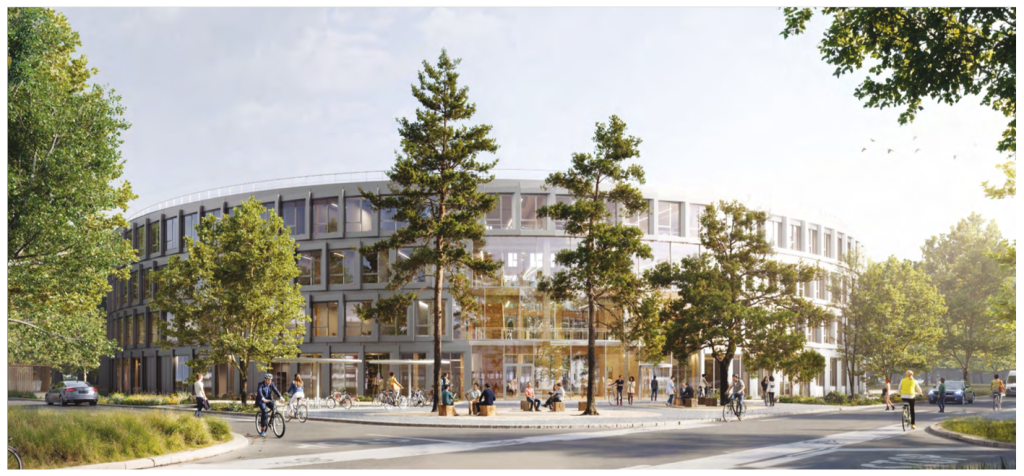
- CERN will develop its Campus Master Plan 2050, actively involving stakeholders in shaping the future of the campus, leveraging new asset and space management policies, to support CERN’s long-term scientific and operational goals and to improve the everyday experience for CERN’s personnel and visitors.
- CERN is planning a major new externally funded initiative (the O2 Project) to green our campuses through a major campaign of planting trees, improving the mobility measures and improving the sustainability of the Meyrin site. Plans for this initiative will be developed in 2026.